
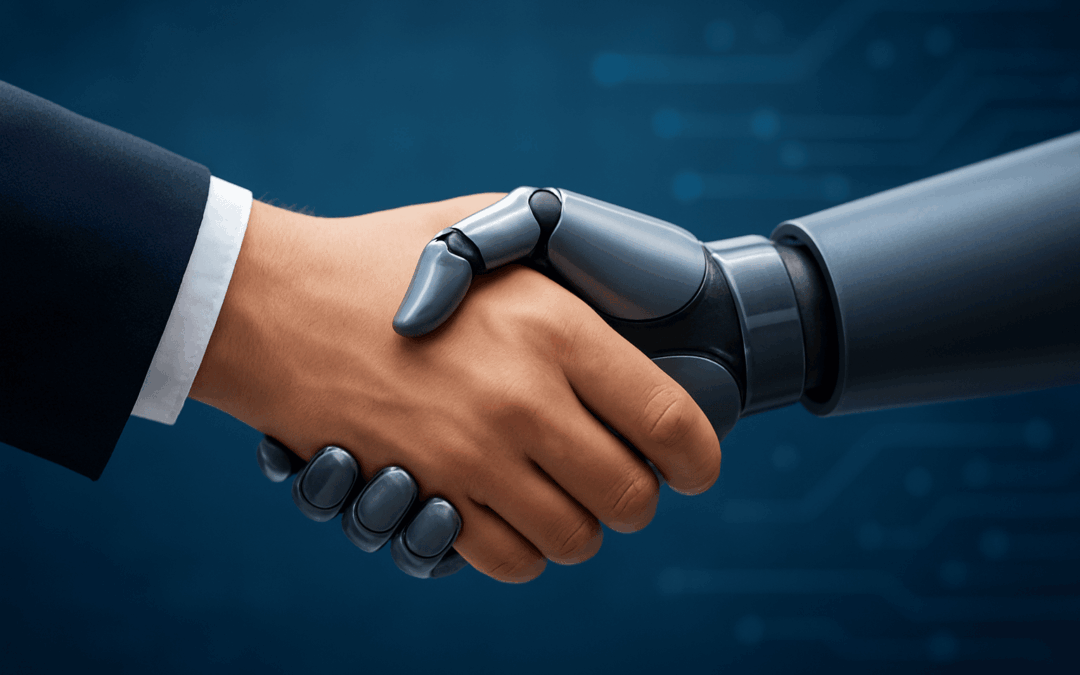
AI is everywhere right now — in headlines, on your device, even in the tools you already use to run your business. Much of the discussion focuses on efficiency: faster reports, automated forecasts, cheaper content. Those benefits are real. But there’s a deeper question every SME owner should ask:
How is AI changing you as a leader, and how is it changing your customers?
This isn’t just about technology. It’s about people. And it echoes something Peter Drucker warned of: “The greatest danger in times of turbulence is not the turbulence; it is to act with yesterday’s logic.”
A Little History + Drucker’s Lens
Each technological wave has reshaped us:
The printing press made knowledge accessible — but blurred the line between fact and opinion.
Radio and television expanded our reach, but compressed attention.
The internet made us information-rich; social media shifted trust from institutions to peers and networks.
Drucker stressed that organisations must adapt to what customers will become, not just serve them as they are today. AI is forcing that adaptation now. It isn’t just changing what you deliver or how you work: it’s altering how people think, decide, and connect.
What We See Changing in You and Your Customers
Drawing on Mark Schaefer’s How AI Changes Your Customers and Drucker’s management insights, here are six changes we see most clearly:
1. Attention is shorter.
We skim, scroll, and accept quick answers. Drucker reminded us that knowledge workers must resist being reduced to reactive behaviour.
2. We miss the human touch.
Machine efficiency is cool; empathy is essential. Customers will remember how they felt. As Drucker put it Culture eats strategy for breakfast.
3. We feel less in control.
When choices are guided by algorithms, we risk losing ownership. As we argued in AI & SMEs: Who Is the Master, the challenge for smaller firms is to keep human agency in the decision-making process.
4. We look for values and meaning.
When everything else is commoditised, customers buy into your “why.” We explored this in Why You Do It Is More Important than How or What.
5. We crave belonging.
Even with digital convenience, people want to feel part of something. Drucker valued organisations as “moral communities” where people connect. SMES can compete with big businesses in this space.
6. Trust shifts from brands to systems.
Customers increasingly trust what feels consistent and transparent — even if that’s an algorithm. But trust, Drucker argued, comes from responsibility and reliability.
Why This Matters for SME Owners
You might ask: if AI can produce insights faster, why would customers need me?
Because AI can give answers. But it can’t give meaning.
AI can calculate. But it can’t care. That’s where you come in.
Your role is to be what machines cannot be: the partner, the sense-maker, the one who provides context and empathy.
This echoes an earlier Drucker Forum piece, Entrepreneurs Are Self-Centred, where we argued that small business owners often lead from their own perspective, but must also adapt to their customers’ shifting needs. AI accelerates that requirement.
And in Want to Scale? Don’t Copy the Big Companies, it was explained that SMEs succeed by leaning into their unique strengths, not by imitating larger players. The same lesson applies here: don’t mimic AI-driven giants; use AI to enhance your human edge.
Clear Actions You Can Take
To make this practical, here’s what you can do next — drawn from Schaefer’s insights, Drucker’s teachings, and our own advisory work:
- Audit your touchpoints
Identify where customers feel warmth and empathy, and where they feel processed. Strengthen the human moments. - Be transparent about AI
If you use it, say so. We do. Show how it saves time for deeper conversations. Transparency builds trust. - Simplify communication
Replace jargon with clarity. Use visuals, examples, and stories. (Drucker: “The most important thing in communication is hearing what isn’t said.”) - Protect customer agency
Present options and trade-offs, not prescriptions. Keep decision-making in the customer’s hands. - Live your values
Don’t just state them. Demonstrate them in everyday interactions. (See our blog: Why You Do It Is More Important than How or What). - Foster community
Create forums, learning sets, or peer groups. This builds belonging and loyalty. - Move further into advisory
Transactional services will be automated. Advisory — guiding decisions, giving context — is what differentiates you. (See: Accountants to Get Into Advisory). - Challenge groupthink
Don’t let AI narrow choices to a single path. Encourage fresh perspectives and critical thinking. (See: Be Wary of Groupthink).
Final Thought
Your customers — and you — are being reshaped by AI. Choices are quicker, attention shorter, trust shifting.
But Drucker’s lesson holds: in turbulence, yesterday’s logic won’t work. The fundamentals remain — people want to feel heard, confident, and in control.
AI isn’t competition. It’s a call to bring humanity back into business. That’s your edge.
And it’s the one thing no machine can replace.
How we can help you
We have been here before and we have all the tools and expertise, including AI tools, to help you create plans that are agile, flexible and resilient, so that you will have confidence that you can to overcome the unexpected, mitigate their effect, or avoid them. We can help you monitor the results, model any changes you want to make, listen and discuss with you the best ways of achieving your goals. My book Understanding the Numbers: Make Your Business and Your Life Better helps you avoid mistakes that lowers business value, that I’ve seen time and time again.